




DLP Technology Digital Light Processing DMD Chip refers to a system where millions of tiny mirrors on a DMD chip move to control light and create images. Each mirror acts as a pixel, tilting quickly to reflect light and form detailed pictures. DLP Technology Digital Light Processing DMD Chip stands out as a key factor when choosing a projector. Many buyers look at how these chips affect color, brightness, and overall performance.
-
DLP projectors hold a 34% share in the business segment worldwide.
-
The Asia-Pacific region leads with a 33% global share, showing rapid growth in China and India.
-
Europe maintains a steady 21% share with consistent expansion.
Key Takeaways
-
DLP projectors use millions of tiny mirrors to create bright, clear images, making them ideal for various settings like classrooms and theaters.
-
Choosing the right DMD chip size affects image quality; larger chips provide higher resolutions and better performance for home theaters.
-
DLP technology excels in contrast and motion clarity, offering deep blacks and fast response times, which benefits gamers and movie enthusiasts.
-
DLP projectors require less maintenance due to sealed optics, ensuring long-term reliability and consistent image quality without dust interference.
-
When selecting a projector, consider factors like resolution, brightness, and chip type to find the best fit for your needs.
DLP Technology And DMD Chip Basics
What Is DLP Technology
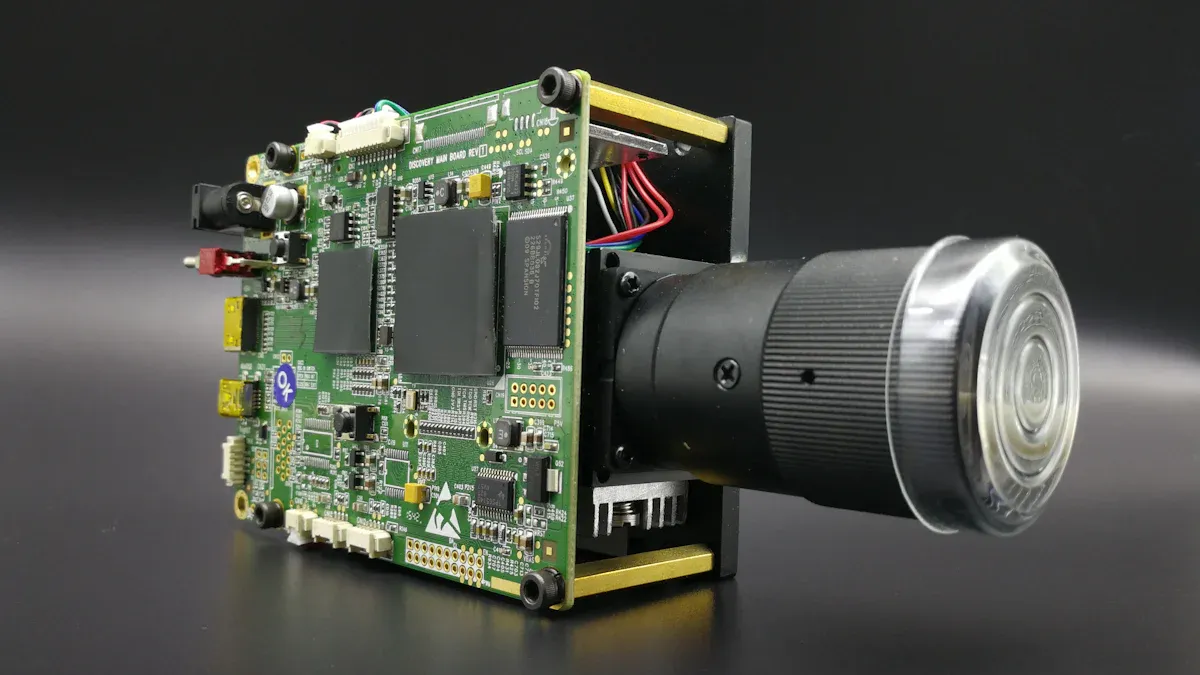
DLP Technology Digital Light Processing DMD Chip describes a display method that uses tiny mirrors to create images. DLP stands for Digital Light Processing. This technology uses a special chip called a Digital Micromirror Device, or DMD. The DMD chip acts as the heart of the system. It controls how light forms pictures on a screen. DLP projectors use this technology to show bright, clear images in classrooms, theaters, and homes.
|
Component/Principle |
Description |
|---|---|
|
Digital Micromirror Device |
Creates pixels using millions of tiny mirrors. Each mirror matches a pixel in the image. |
|
One-chip vs. Three-chip |
One-chip uses a color wheel for color. Three-chip uses separate DMDs for red, green, and blue. |
|
Longevity and Sealing |
DMD chips last a long time and stay clean because they are sealed from dust. |
|
Image Quality |
DLP systems give strong contrast and even brightness. |
What Is A DMD Chip
A DMD chip is a small part made of many microscopic aluminum mirrors. Each mirror can tilt to reflect light or block it. The chip forms the image by turning mirrors on or off very quickly. Here are some key facts:
-
The DMD chip has an array of tiny mirrors, each acting as a pixel.
-
Each mirror switches between "on" (reflecting light) and "off" (not reflecting light).
-
The chip uses fast switching to create different shades of gray.
-
When used with color filters, the chip can make full-color images.
-
DMD chips work in projectors, digital cinemas, and 3D printers.
How DLP And DMD Work Together
DLP Technology Digital Light Processing DMD Chip works by combining the DMD chip with a light source and, in many cases, a color wheel. The process follows these steps:
-
Light shines from the projector lamp.
-
The light passes through a spinning color wheel that splits it into red, green, and blue.
-
The DMD chip tilts its mirrors to reflect the right color at the right time.
-
The rapid movement of the mirrors creates a full-color image that people see on the screen.
This teamwork between DLP technology and the DMD chip allows projectors to show sharp, colorful pictures in many settings.
How DLP Technology Digital Light Processing DMD Chip Works
Micromirror Operation And Grayscale
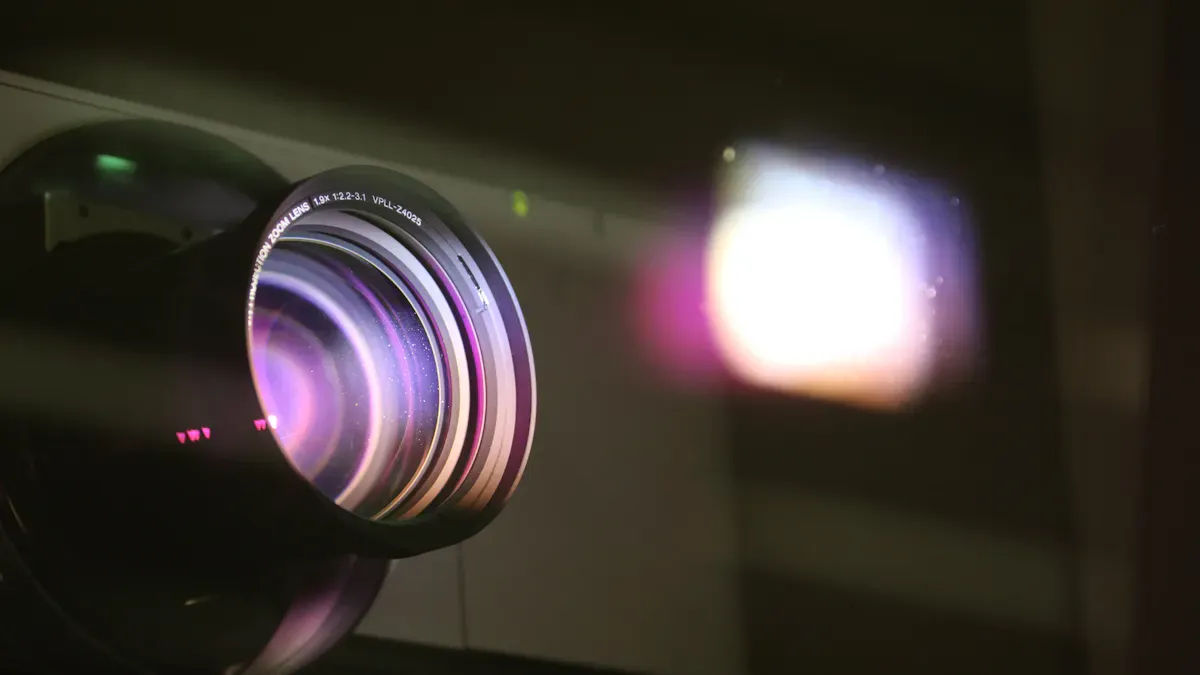
A DLP Technology Digital Light Processing DMD Chip uses millions of tiny mirrors to create images. Each mirror acts as a pixel and sits on a hinge. The mirror tilts toward or away from the light source. When the mirror tilts toward the light, it reflects brightness onto the screen. When it tilts away, it sends light into a dark area, making the pixel appear black.
The chip controls image brightness and grayscale by switching each mirror on and off very quickly. This process is called pulse-width modulation. The longer a mirror stays in the "on" position, the brighter the pixel appears. If the mirror spends more time in the "off" position, the pixel looks darker. By changing the amount of time each mirror stays on or off, the chip can create up to 1024 shades of gray. This method allows the projector to show smooth transitions between light and dark areas.
The DLP projection system uses a bit-streamed spatial light modulation technique. This technique lets the chip reflect pixels in many gray levels, which helps control both grayscale and image brightness.
|
Mechanism |
Description |
|---|---|
|
Mirror Tilt |
The mirror tilts toward the light source to create a bright pixel. It tilts away for a dark pixel. |
|
Pulse-width modulation |
The chip controls the speed and duration of the tilts to produce different shades of gray. |
-
The mirrors switch between on and off states rapidly.
-
More frequent off states produce darker gray pixels.
Color Synthesis And The Color Wheel
DLP Technology Digital Light Processing DMD Chip creates color images using a spinning color wheel. The projector shines white light through this wheel, which splits the light into red, green, and blue segments. The color wheel spins very fast, so the DMD chip can reflect each color in quick succession. The human eye blends these flashes together, making a full-color image.
Different projectors use different types of color wheels. Entry-level models often use a 6-segment wheel with two sets of red, green, and blue. Mid-range models may add a white segment to boost brightness. High-end models use more segments, such as cyan or yellow, to improve color accuracy and cover a wider range of colors.
|
Color Wheel Type |
Description |
Key Features |
|---|---|---|
|
Entry-level models |
Balanced color, but may show rainbow effects during fast movement. |
|
|
7-segment (RGBWRGB) |
Mid-range models |
Increases brightness without losing color accuracy. |
|
8-segment (RGBCYRGB) |
High-end models |
Expands color range, especially for skin tones and pastels. |
The color wheel method relies on time-sequential RGB. The projector shows red, green, and blue images one after another. The eye combines these into a single full-color picture. This method can sometimes cause color transitions to look less smooth, especially if the wheel spins slowly or includes a white segment to boost brightness.
Applications In Projection And 3D Printing
DLP Technology Digital Light Processing DMD Chip finds use in many fields. Projectors use this technology to display movies, presentations, and games with sharp images and vivid colors. The fast mirror switching and color wheel allow for smooth video playback and clear graphics.
In 3D printing, DLP technology helps create detailed objects quickly. The chip projects an entire layer of an object at once, which speeds up the printing process. DLP 3D printers can reach resolutions as fine as 6 by 6 micrometers. This high precision makes them useful for medical models, dental devices, and custom parts.
-
DLP 3D printing creates medical models using patient-specific cells.
-
The technology allows for rapid printing of tissues and cancer models, which helps speed up drug discovery.
-
DLP printers can make complex, personalized products with high accuracy and speed.
|
Technology |
Speed |
Resolution |
Efficiency |
|---|---|---|---|
|
DLP |
Fast (mm³/s) |
6 x 6 μm |
85-95% |
|
Laser-assisted |
Medium (mm/s) |
~1 μm |
>85% |
|
SLS |
Slow (μm/s) |
N/A |
N/A |
DLP Technology Digital Light Processing DMD Chip stands out for its ability to deliver both high-quality images and precise 3D printed objects. This versatility makes it valuable in entertainment, education, healthcare, and manufacturing.
DMD Chip Types And Image Quality
DMD Chip Sizes Compared
DMD chips come in different sizes, and each size affects the projector’s resolution and image quality. The most common chip sizes are 0.23-inch, 0.33-inch, and 0.47-inch. Each chip contains a different number of physical pixels. The table below shows how these chips compare:
|
Chip Type |
0.23″ DMD Chip |
0.33″ DMD Chip |
0.47″ DMD Chip |
|---|---|---|---|
|
Physical Pixels |
960 x 540 |
1280 x 720 |
1920 x 1080 |
|
Max Resolution with XPR |
1080p |
1080p |
4K |
A 0.23-inch chip works well for portable projectors and basic presentations. The 0.33-inch chip offers better clarity for home use. The 0.47-inch chip provides the highest native resolution and supports 4K projection with special technology.
XPR Technology And 4K Projection
XPR technology helps projectors display 4K images even if the DMD chip has fewer physical pixels. The system shifts the light reflected from the chip’s mirrors at a sub-pixel level. This movement happens very quickly and creates the effect of a higher resolution. XPR technology allows a 0.47-inch chip to show 4K images without adding more mirrors. The result is a sharper and more detailed picture. Some viewers may notice a rainbow effect during fast scenes, but most people see a smooth and clear image.
Choosing The Right DMD Chip
Selecting the right DMD chip depends on the application. The table below lists important factors to consider:
|
Factor |
Description |
|---|---|
|
Resolution |
Higher resolutions give sharper images, which are best for home theaters. |
|
Light Source Compatibility |
The chip should work well with the projector’s light source, such as LED or laser. |
|
Color Accuracy and Gamut |
Multi-chip systems provide better color, important for film and design work. |
|
Brightness and Contrast |
High brightness is needed for bright rooms. Good contrast adds depth to the image. |
|
System Compatibility |
The chip should support current video standards and future technologies. |
DLP Technology Digital Light Processing DMD Chip offers a range of options for different needs. A user can choose a chip based on the desired image quality, color performance, and compatibility with other projector features.
DLP Advantages Over LCD
Contrast And Black Levels
DLP projectors stand out for their ability to deliver deep blacks and high contrast. The DMD chip inside DLP Technology Digital Light Processing DMD Chip uses millions of tiny mirrors. Each mirror can direct light precisely, which helps create true black by reflecting light away from the screen. This feature gives DLP projectors an edge in home theater settings, where dark scenes matter. Many users notice that movies look more lifelike, with shadows and highlights appearing crisp and clear. In comparison, LCD projectors often struggle with light leakage, which can make black areas look gray.
|
Projector Type |
Market Share |
User Satisfaction Factors |
|---|---|---|
|
DLP |
Superior contrast ratios, compact design, low maintenance |
|
|
LCD |
31.5% |
High color brightness, suitable for classrooms and conference rooms |
Speed And Motion Performance
DLP projectors excel in speed and motion clarity. The DMD chip switches mirrors at microsecond speeds, which reduces motion blur and ghosting. This fast response is important for gaming and action movies. Many DLP models support high refresh rates, up to 240Hz, and offer low input lag. For example, DLP projectors can achieve input lag as low as 4ms at 1080p 240Hz. Gamers and movie fans benefit from smooth, sharp images during fast scenes.
-
DLP projectors have lower input lag due to less image processing.
-
Game Mode on DLP projectors further reduces latency.
-
High refresh rates enhance motion clarity and reduce blur.
Durability And Sealed Optics
DLP projectors use sealed optical engines. This design keeps dust out and protects the imaging chip. As a result, DLP projectors require less maintenance than LCD models. Users do not need to clean filters or worry about dust spots on the image. Over time, DLP projectors maintain image quality and reliability. Many professional reviews highlight that DLP projectors operate without air filters and avoid issues like color fading or dead pixels. This durability makes them a smart choice for long-term use in home theaters and gaming rooms.
|
Advantage |
DLP Projectors |
LCD Projectors |
|---|---|---|
|
Prevents dust spots |
No sealing, dust spots possible |
|
|
Filter-Free |
Reduces maintenance |
Require periodic filter cleaning |
|
No Image Persistence |
No ghosting of static images |
May retain ghost images |
|
Maintains Image Quality |
No degradation over time |
LCD panels can degrade |
Understanding DLP Technology Digital Light Processing DMD Chip helps buyers choose the right projector for their needs. Users should compare chip sizes, brightness, and contrast to match their environment. DLP projectors offer high contrast, fast response, and low maintenance, making them ideal for home theaters and classrooms. The table below highlights key differences:
|
Feature |
DLP Projectors |
LCD Projectors |
|---|---|---|
|
Contrast |
High |
Moderate |
|
Maintenance |
Low |
Higher |
|
Response Time |
Fast |
Slower |
Tip: Always check resolution, brightness, and chip type before buying a projector.
FAQ
What is a DMD chip made of?
A DMD chip uses millions of tiny aluminum mirrors. Each mirror sits on a hinge. The chip uses semiconductor materials to control the movement of these mirrors.
What does the color wheel do in a DLP projector?
The color wheel splits white light into red, green, and blue. The DMD chip reflects each color in turn. The human eye blends these colors into a full image.
What makes DLP projectors good for gaming?
DLP projectors use fast-switching mirrors. This speed reduces motion blur and input lag. Gamers see smooth action and clear images during fast scenes.
What is XPR technology in DLP projectors?
XPR technology shifts the image quickly. It creates more pixels on the screen. This process lets a projector show 4K images even with fewer physical mirrors.
What applications use DLP technology besides projectors?
DLP technology works in 3D printers. It helps create detailed objects layer by layer. Medical models, dental devices, and custom parts use this technology for high accuracy.